Train From London To Scotland: Scenic Routes And Saving Tips
Author:Andy
Train travel from London to Scotland has become a favourite for adventurers and solo travellers alike. Beyond getting you from A to B, the journey unfolds across landscapes that shift from gently rolling English hills to rugged Scottish mountains and serene lochs. If you've ever wanted a trip where the scenery is as much a part of the experience as the destination, this is it.
Why Train Travel Actually Makes Sense
Comfort Without the Airport Chaos
Unlike flying, boarding a train is straightforward: no long security lines, no restricted liquids, and no hidden baggage fees.
On services like LNER or Avanti West Coast, you can grab a window seat, settle in with a book or playlist, and enjoy the ride. On some LNER services, Wi-Fi speeds reach 20-25 Mbps, meaning streaming or light work is easily possible.
A Greener Way to Travel
Trains are far more eco-friendly than planes. On average, the carbon footprint per passenger from London to Edinburgh is about 25 kg CO₂ by train versus 125 kg by plane. That's five times less. For anyone conscious of their travel impact—or simply wishing to avoid airport stress—train travel is a double win.
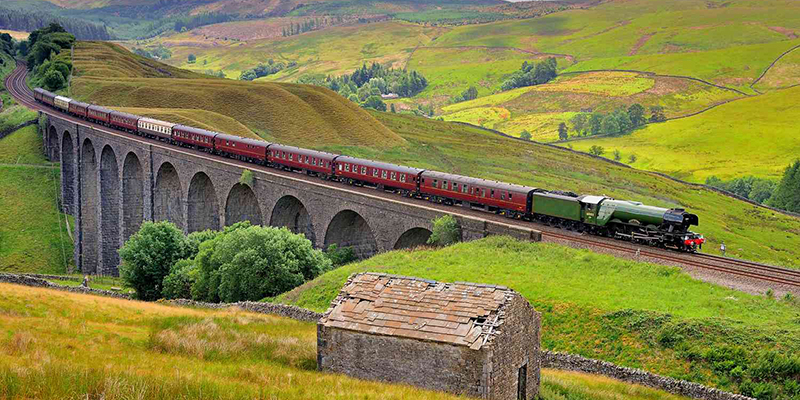
Scenic Routes Worth Choosing
LNER: London King's Cross to Edinburgh
LNER runs roughly every 30-60 minutes between London King’s Cross and Edinburgh Waverley, with up to ~32 daily departures and direct services taking ~4 h 20 min to 4 h 30 min on the fastest trains.
Booking opens up about 12-16 weeks in advance, and early Advance fares can be as low as £30-£40 one-way, though prices vary a lot by date and time - mid-morning or early afternoon off-peak slots often cost less. A Railcard can knock around a third off the fare if you’re eligible.
This route passes through York, Darlington, Newcastle, and Berwick-upon-Tweed, giving travellers a snapshot of northern England scenery before entering Scotland.
Highlights I’ve loved on LNER:
Northumberland National Park: Wide-open skies and rolling hills, perfect for a photo stop.
Scottish Borders: Look out for the River Tweed; it’s surprisingly dramatic from a train window.
Coastal views north of Newcastle: Especially between Alnmouth/Berwick and Edinburgh - sit on the right side northbound for sea glimpses.
Onboard perks:
Free Wi-Fi and power outlets at nearly every row.
Let’s Eat At Your Seat: scan the QR at your seat to order food to your seat instead of walking to the cafe bar.
Standard class still has a buffet car and trolley service; first class adds wider seats, complimentary food/drinks, and access to lounges at London and Edinburgh.
Tips:
Arrive ~15-20 min early and check platform info in the LNER app to board quickly.
Choose a window seat on the scenic side (northbound: right) for better photos.
If cheap Advance tickets sell out, consider flexible or split ticket options (two segments) to save money.
If you want to capture the journey, the stretch between Berwick-upon-Tweed and Edinburgh is particularly photogenic - early morning light gives the rivers and coastline a soft glow.
Avanti West Coast: London Euston to Glasgow/Edinburgh
This is the fastest West Coast Main Line route if time is tight. Trains from London Euston to Glasgow Central typically take around 4 h 30 min to 5 h on the quickest services, with direct departures roughly every 2 hours (some alternate with Edinburgh services). Booking early often brings the best advance fares, and using the official Avanti app or website avoids extra fees. Railcards can cut about a third off the ticket price.
Even standard seats are comfortable for longer trips, with free Wi-Fi, power sockets, and a café/shop onboard; Standard Premium adds extra legroom and a table. First Class passengers enjoy reclining seats, complimentary drinks, at-seat service, and access to First Class lounges at Euston and Glasgow.
Scenic highlights:
Lake District: Rolling hills, quaint villages, and occasional lake reflections make the stretch around Oxenholme especially picturesque - sit on the west side northbound for the best views.
West Coast Main Line coastal glimpses: Near Lancaster and Morecambe Bay, you can catch distant views of the Irish Sea and estuaries that contrast nicely with inland landscapes.
xUrban contrast: The line passes through or near Birmingham, Preston, and Carlisle, offering a snapshot of UK city life before the quieter Scottish lowlands.
Tips:
Travel off-peak (mid-morning or early afternoon) for lower prices and quieter carriages.
Check live schedules on the Avanti app to avoid delays or engineering works, which sometimes lead to diversions via East Lancashire or temporary timetable changes.
If Edinburgh is your final stop, some Avanti services continue there, but you might also find competitive alternatives on other routes.
East Coast vs. West Coast Lines
East Coast Main Line
Rolling countryside, historic cities like York, Durham, and Newcastle, and coastal views near Dunbar make this route great for varied scenery. The line between York and Edinburgh runs through open fields, then dramatic architecture like Durham Cathedral and the Angel of the North near Newcastle, followed by long sea glimpses along the Northumberland and Scottish coasts - especially the Royal Border Bridge at Berwick-upon-Tweed and North Sea views north of there. Many travellers rate the northern East Coast views as some of the most striking coastal scenery on a main UK route.
Travel tips:
Sit on the east/right side heading north for the best sea views and approaching the coast; mornings often bring softer directional light that makes the coastline glow.
West Coast Main Line
The West Coast route (London Euston to Glasgow/Edinburgh) doesn’t hug the sea but rewards with rugged inland landscapes. After passing through urban hubs, it skirts the Lake District’s fells and Morecambe Bay area, sweeps up through the Pennines and Southern Uplands, and climbs towards Scotland with distant hills and wide valleys.
A classic highlight linked to this corridor is the West Highland Line and the Jacobite steam train (Fort William-Mallaig), famous as the Harry Potter “Hogwarts Express” and crossing the iconic Glenfinnan Viaduct with mountains, lochs, and sea lochs beyond - a truly cinematic experience.
Travel tips:
If you plan to ride the Jacobite, book tickets 3-4 months ahead, especially in summer; it’s one of the UK’s most popular heritage journeys.
In short, the East Coast offers historical cities and dramatic coastal panoramas, while the West Coast delivers hilly inland vistas and - with extensions like the West Highland Line - some of Scotland’s most unforgettable scenery.
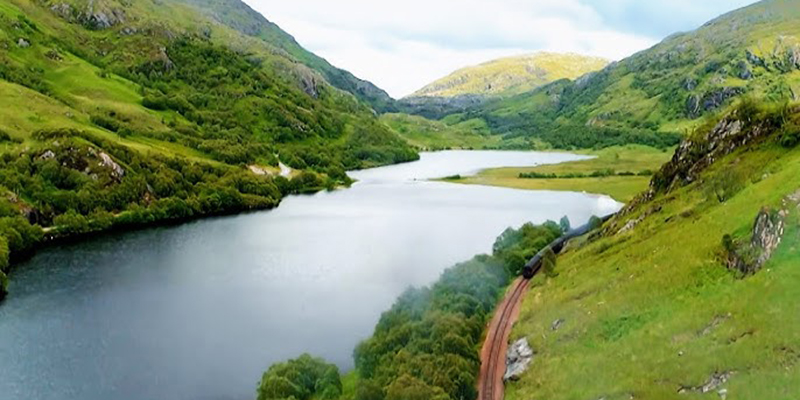
Highland Main Line
If your goal is the Highlands themselves, this line is unbeatable. The Highland Main Line runs north from Perth to Inverness, cutting deep into the Central Highlands and Cairngorms National Park with some of the most natural landscapes in Britain. You’ll pass forests, open glens, heather-covered hills and glacial valleys as the train climbs through Drumochter Pass - one of the highest points on any UK rail route - before descending toward the Moray Firth.
Expect glimpses of Loch Insh and the Cairngorm mountains as you approach Aviemore, with plenty of dramatic vistas that feel remote and untouched. Even short stops at Pitlochry or Aviemore provide easy access to hiking trails, cascading rivers, and scenic walks - from short paths around Loch Faskally to longer routes through pine forests and mountain terrain.
Scenic tips:
Sit on the right side heading north for views of the River Tay valley, hills and intersecting glens as the train climbs out of Perth.
Between Kingussie and Aviemore, watch for the Insh Marshes and Loch Insh with mountains beyond - especially stunning in morning or evening light.
If you enjoy wildlife or forests, the Rothiemurchus area near Aviemore is rich with pines and wildlife like red squirrels and deer.
Money-Saving Tips That Actually Work
Book Early
Advance fares can be as much as 60% cheaper than buying last-minute, because train companies release a set number of cheap tickets up to ~12 weeks before travel, and prices rise as they sell out. Setting a calendar reminder to check LNER and Avanti prices when advance tickets drop often saves £40-£50 per ticket - and on big routes like London-Scotland, you can sometimes grab deals weeks ahead.
Travel Off-Peak
Off-peak weekdays (roughly 10 a.m.-3 p.m., and all day weekends) are noticeably cheaper than peak travel. For example, a midweek off-peak London-Edinburgh ticket can fall to £35-£45, versus £80+ peak. Travelling just outside rush hours (after 9:30 a.m.) usually unlocks better prices.
Railcards and Passes
Railcards (like 16-25, Senior or Two Together) save about 1/3 per journey and often pay for themselves after just a couple of trips. A BritRail Pass (for visitors) or Interrail/Eurail Pass can be great value if you’re planning multiple Scotland or UK journeys over several days - unlimited travel within your pass window can save over £100 compared with booking individual tickets.
Pack Smart Snacks
Onboard cafes charge £4-£6 for coffee and £5-£8 for sandwiches. Bringing your own snacks (sandwiches, fruit, bottled drinks) can save £15-£20 per trip, plus give you more control over healthy choices.
Window Seat Strategy
If scenic photography is the goal, try to book a left-side seat northbound on LNER for coastal and countryside views, and right-side on Avanti for Lake District and Western vistas - the early morning light often delivers softer, more photogenic conditions.
Extra Practical Hacks
Use fare finder tools (Trainline, Split My Fare) to compare dates and split tickets into segments that can be cheaper than a one-through ticket.
Be flexible with travel days - midweek (Tue/Wed) and off-peak times usually cost less.
Some apps and credit cards offer cashback or promo deals on rail tickets if you book through them.
Latest News

Why Slow Travel Is Becoming the Biggest Travel Trend of 2026
March 13, 2026

Europe Made Easy: 10 Best European Tour Operators for Senior Travelers
November 19, 2025

10 Best Places To Go For Fun Family Vacations
October 3, 2025

Fun And Affordable Weekend Trip Ideas You'll Love
September 29, 2025

Discover The Best Jamaica Beaches: Top Spots To Visit
September 25, 2025

Beyond Earth's Horizon: The Spectacular Rise of Space Tourism
September 17, 2025